I like consistency. Every Friday, I clock into the office for my 9-to-5, and every Friday at 12pm, like clockwork, I pick up an eight-piece baby avocado sushi box and a Boost Juice. It’s not always the best vegan lunch in the city, not even close – but it’s mine. Familiar, predictable, quietly comforting. I know what I’m getting, where to find it, and that it’ll be available. That quiet devotion to routine runs through most corners of my life – music included. Few things offer a more enduring ritual than my ongoing return to the world of ECM (Editions of Contemporary Music) Records.
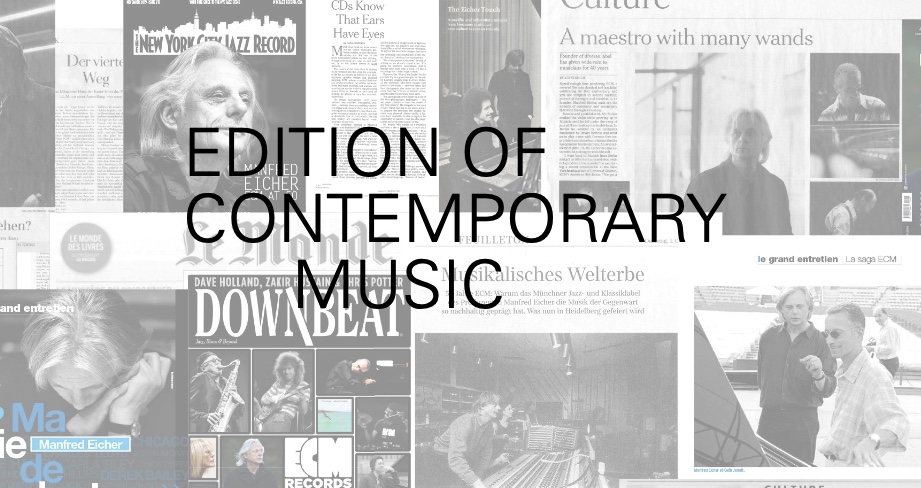
Founded in 1969 by producer Manfred Eicher, ECM has spent over half a century crafting a substantial catalogue – over 1,800 records and counting – that moves seamlessly across, and often blurs the lines between, jazz and modern classical music. Its secret is an obsessive commitment to consistency — not always necessarily in sound, but in unwavering spirit. Take two records from opposite ends of the ECM release timeline and the differences will be obvious. But listen closely, and you’ll hear the same underlying pulse: the spaciousness, the reverberation, the sense that the music is a living, breathing organism.
The latest ECM release, Arcanum by Norwegian trumpeter Arve Henriksen — released the same month I write this — might not resemble Free at Last, the Mal Waldron Trio’s 1970 debut that opened the label’s catalogue. But ears will recognize the touch. They’re two different boxes of sushi – meticulously crafted and assembled by the same hand. Different, yes — yet unmistakably familiar.
The internet in 2025 isn’t lacking for pieces on ECM – or top ten lists, for that matter. I understand that. However, more often than not, the spotlight falls squarely on the label’s 1970s output — and understandably so. That decade is littered with landmark releases, the kind that defined ECM’s aesthetic and etched names like Keith Jarrett, Chick Corea, Pat Metheny, Gary Burton, and Ralph Towner into the label’s foundation. It was, arguably, ECM at its consistently creative peak.
Still, I’d argue that this era, while vital, is far from the whole story. Some of the label’s most breathtaking work has emerged in the 21st century — yet I find that these records are often overlooked in retrospectives and rankings. The consistency I mentioned earlier — that commitment to an established sonic identity — has occasionally drawn criticism. I have witnessed detractors on Facebook groups, and in message boards, claim that ECM has played it too safe, leaning heavily on “The ECM Sound,” a phrase used to describe its spacious, ambient-leaning production aesthetic. There may be some truth to that — but it doesn’t tell the whole story of the post-Y2K catalogue. I insist that there is gold to be found.
What follows is my selection of ten crucial ECM albums, with a deliberate emphasis on records from the 21st century — my testament to the label’s quiet, ongoing evolution and unrivalled consistency.
 The Spectral Report
Leave a comment